
Trial, Triumph, and the Art of the Possible (Part 1)
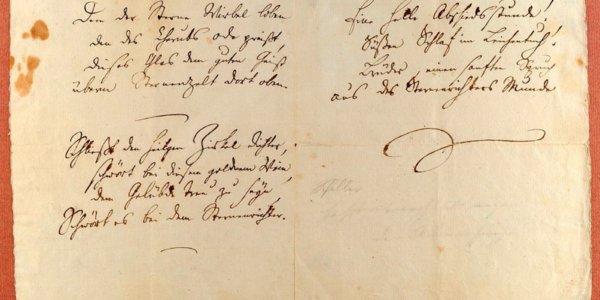
Image: Autographed manuscript of von Schillers Ode an die Freude. Created 1785.
Beethoven was 15 years old when Shiller’s poem “Ode to Joy” was published. It was a blazing manifesto that says if freedom, justice, and human happiness are placed at the centre of life and made its primary devotion, politically and personally, then peace and kindness would envelop humankind as an inevitable consequence.
Shortly after the poem was written, The Reign of Terror followed and Schiller died considering his “Ode to Joy” a failure — an idealist’s fantasy unmoored from reality.
The young Beethoven was determined to take Schiller’s bright beam of possibility and bring it to life in his own way but at 39 years old and almost entirely deaf, he found himself “suffering misery in a most concentrated form”. Six years of struggling with disappointments and fraught relationships with friends and family made it so hard to work that he had to actively seek out commissions to live on. A meagre £50 from London’s Harmony Society provided enough subsistence and assurance for him to get to work on his masterpiece.
After all the difficulties of writing the symphony and incorporating Shiller’s words into a choral section, something no-one had done before, he faced yet more upsets and arguments about where the first performance would be, then astounded everyone by demanding that he conduct the symphony himself, despite being completely deaf by this time.
The only two rehearsals that could be arranged for the enormous ensemble were catastrophic and the first performance was only made possible by another conductor secretly conducting the musicians and singers out of sight of Beethoven and with the performers instructed not to acknowledge his presence.
When the final chord of “Ode to Joy” had been played in front of that first audience, Beethoven was still facing the orchestra and still waving his arms to the music only he could hear. He didn’t notice the effect it had on the stunned audience. As soon as he turned to face them, they erupted with a burst of exultant joy that took many minutes to die down — and that is the effect this music has had on millions of people ever since.
There are many stories of people overcoming enormous personal trials to create something truly wonderful and I guess this is another testament to the power of creativity. I would probably give up …
Watch a glorious flashmob performance of Ode to Joy on YouTube:
See more in Part 2 https://annhawkins.com/creativity/trial-triumph-and-the-art-of-the-possible-part-2/
This is part of a series of posts on Questions about Creativity. The rest of the series can be seen at: https://annhawkins.com/creativity