
Collaboration
What It Is, Why It Matters, Why It’s the Future
I’ve been running collaborative peer groups for over 15 years in the long held belief that collaboration is better for all of us than competition and that all of us are smarter than any of us. If we want a bigger slice of pie, how much better would it be to work together to make the pie bigger instead of taking someone else’s slice?
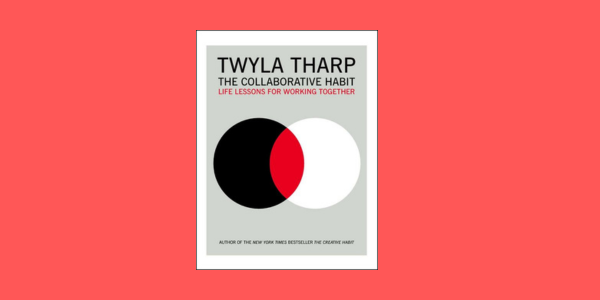
None of the words that follow are mine. They’re all taken from Twyla Tharpe’s book “The Collaborative Habit: Life Lessons for Working Together”. Needless to say, I agree with everything she says:
- Collaboration isn’t an airy concept but a practice that’s found in our daily reality. It’s a recognition that there’s more to life – more opportunity, more knowledge, more danger – than we can master alone. It’s the building block of community.
- The wisdom of a smart group is greater than the brainpower of its smartest member – is increasingly accepted in every discipline and every profession and at every age and stage of life.
- People are people. And people are problems. But – and this is a very big but – people who are practiced in collaboration will do better than those who insist on their individuality.
- Collaborators aren’t born, they’re made. Or, to be more precise, built, a day at a time, through practice, through attention, through discipline, through passion and commitment – and, most of all, through habit.
- Like creativity, collaboration is a habit – and one worth developing. At first it may seem unnatural to show up and care more about a collaborative project than about your personal advancement, but once you start ignoring your comfort level, you’re on your way.
- Even if your collaborators are smarter than you? More hardworking? Quicker-thinking? More imaginative? Yes. It’s like playing tennis; you improve only when you play above your level. So if you have any say in the matter, gravitate to people who are smart and caring. Watch them, learn from them.
- A clearly stated and consciously shared purpose is the foundation of great collaborations. Collaboration doesn’t flourish if people decide to get together “whenever.” It’s remarkably effective, however, when partners set a schedule and establish a routine – when working together becomes a habit. The sooner you establish a routine, the more smoothly your collaboration will advance. The first requirement of collaboration is commitment.
- The root of any collaboration is interchange – literally, change. Nothing forces change more dramatically than a new partnership. Collaboration guarantees change because it makes us accommodate the reality of our partners – and accept all the ways they’re not like us. And those differences are important. The more we can draw upon our partner’s strengths and avoid approving our partner’s weaknesses, the better that partnership will be.
- In a good collaboration, differences between partners mean that one plus one will always equal more than two. “Do not go where the path may lead, go instead where there is no path and leave a trail,” Ralph Waldo Emerson wrote.
- Collaborative projects offer tutorials in reality. And that tutorial always presents the unexpected. At a lecture, Shunryu Suzuki, one of the Zen masters who brought Buddhist practice to the United States, was asked to summarize Buddhism in a sentence. The audience laughed at the impossibility of that challenge. But the Zen master had a ready answer. “Easy,” he said. “Everything changes.”
Read the book: https://www.twylatharp.org/works/the-collaborative-habit-life-lessons-for-working-together/ and if you’d like to talk about collaboration or join one of my collaborative peer groups, let me know!